
























Why Mary Could Not Stay Dead: The Assumption as Theological Inevitability
The Assumption of Mary is one of the most misunderstood doctrines in all of Catholic teaching. Not because it is complicated. Because it is almost always presented in the wrong direction.
"Death has been swallowed up in victory. Where, O death, is your victory? Where, O death, is your sting? The sting of death is sin." — 1 Corinthians 15:54–56
The Assumption of Mary is one of the most misunderstood doctrines in all of Catholic teaching. Not because it is complicated. Because it is almost always presented in the wrong direction.
It is usually taught as a privilege — a special gift God chose to give Mary because of her unique role in salvation history. A divine reward for her faithfulness, her cooperation, her fiat. God loved her so much that he took her body to Heaven rather than leaving it in the earth. A beautiful exception to the rule, granted from outside by a generous God to a deserving mother.
This framing, however pious, misses the deeper truth entirely. Because the Assumption is not an exception to the rule. It is the rule applied with perfect logical consistency to a sinless person for the first time in human history since the Fall.
Mary did not avoid death and corruption because God made an exception for her. She avoided it because the cause of death and corruption was never present in her. And that cause — as Scripture states with absolute clarity — is sin.
To understand the Assumption, you have to begin not with Mary but with death itself. And to understand death, you have to begin with the eight words Gabriel spoke in Nazareth.
What Death Actually Is
Paul does not leave the origin of death ambiguous. In Romans 5:12 he states it as a theological fact that governs all of human history: "Sin entered the world through one man, and death through sin, and in this way death spread to all people, because all sinned."
Death entered through sin. Not alongside sin, not after sin as a separate divine decision, but through sin — as its direct and necessary consequence. Death is what sin produces in a creature made to be filled with God's own life. It is not a punishment imposed arbitrarily from outside. It is the ontological result of separation from the only source of life that exists.
God is life itself. He is not merely a being who has life as one of his properties — he is the source and ground of all life, the one in whom all creatures live and move and have their being (Acts 17:28). A creature filled with God's own life is a creature in the fullest possible sense of the word — alive, whole, unfragmented, dwelling in the source of its existence without separation or distance.
Sin introduced separation. And separation from the source of life is, by definition, death — not merely physical death as the ending of biological function, but ontological death, the progressive unraveling of a creature that has been cut off from what sustains it. Physical death and bodily corruption are the outward, visible expression of an inward, spiritual reality — the soul's separation from God working itself out in the flesh over time.
This is why Paul can say in the same breath that the sting of death is sin (1 Corinthians 15:56). Sin is not merely the occasion of death. It is death's mechanism. Its cause. Its root. Remove sin and you remove death's claim on a creature — not by some external divine intervention, but because the thing that gives death its power over a soul simply is not there.
Kecharitōmenē and the Absence of Death's Cause
Now return to Gabriel's greeting.
Kecharitōmenē — she is the graced one. Her very being constituted by God's own grace, his own life filling her so completely that there is no separation, no distance, no privation between her soul and its Creator. Not a woman who received grace as a gift added to her nature. A woman whose nature is grace — who exists in the permanent, uninterrupted, constitutive state of complete reconciliation with God.
She was never touched by sin. Not at the moment of her conception, not at any point in her earthly life, not in any degree or in any form. The Immaculate Conception — which we established in the previous post as a theological necessity, not a pious tradition — means that the root of death was never planted in her. The cause from which death grows was simply absent. Not removed. Not healed after the fact. Never present in the first place.
And if sin is absent, then what claim does death have?
The answer, followed with full logical consistency, is none.
Death claims us because sin claimed us first. Sin separated us from the source of life, and death is what that separation produces in creatures of flesh and soul. But Mary was never separated. The source of life never withdrew from her. She was kecharitōmenē — filled with God's own life from the first instant of her existence, without interruption, without exception, to the last moment of her earthly life.
There was nothing in her for death to work on. No separation for corruption to express. No wound for decay to enter. The mechanism by which death exercises its dominion over human beings was simply not present in her — and therefore death's dominion over her body was not possible.
Not as a privilege. As a consequence. As the inevitable result of what she already was.
The Pattern Scripture Already Established
This is not without precedent in Scripture. God had already shown, in two figures from the Old Testament, that bodily death and corruption are not inevitable features of human existence — that under specific conditions, the rule can be suspended because the cause is not present in the same way.
Enoch walked with God, and then he was not, because God took him (Genesis 5:24). No death recorded. No burial. No corruption. He was simply taken. The author of Hebrews confirms it: "By faith Enoch was taken up so that he should not see death." (Hebrews 11:5)
Elijah was taken up to Heaven in a whirlwind, in a chariot of fire, without passing through death (2 Kings 2:11). The greatest prophet of Israel, the one who would return before the great and terrible day of the Lord, taken bodily into God's presence.
These two figures are not random. They are Scripture's way of establishing that bodily assumption — being taken into God's presence without the normal passage through death and corruption — is not impossible, not unprecedented, not a violation of the created order. It has happened. The question is always whether the conditions are present that make it appropriate.
For Enoch and Elijah, the conditions were present in some form that Scripture does not fully explain. For Mary, the conditions are present in the most complete and theologically rigorous way possible — because she is kecharitōmenē, because she was never touched by sin, because the cause of death and corruption was never part of her nature.
If Enoch and Elijah were assumed or taken without dying in any normal sense, then Mary — who is more completely sinless than either of them could be, who is the kecharitōmenē, whose entire existence was constituted by God's own grace from the very beginning — could not have been left in the earth to decay. The logic that applies partially and mysteriously to Enoch and Elijah applies to Mary completely, necessarily, and with full theological grounding.
The Body That Carried God
There is a further argument that follows from the Incarnation itself — and it is perhaps the most viscerally powerful of all.
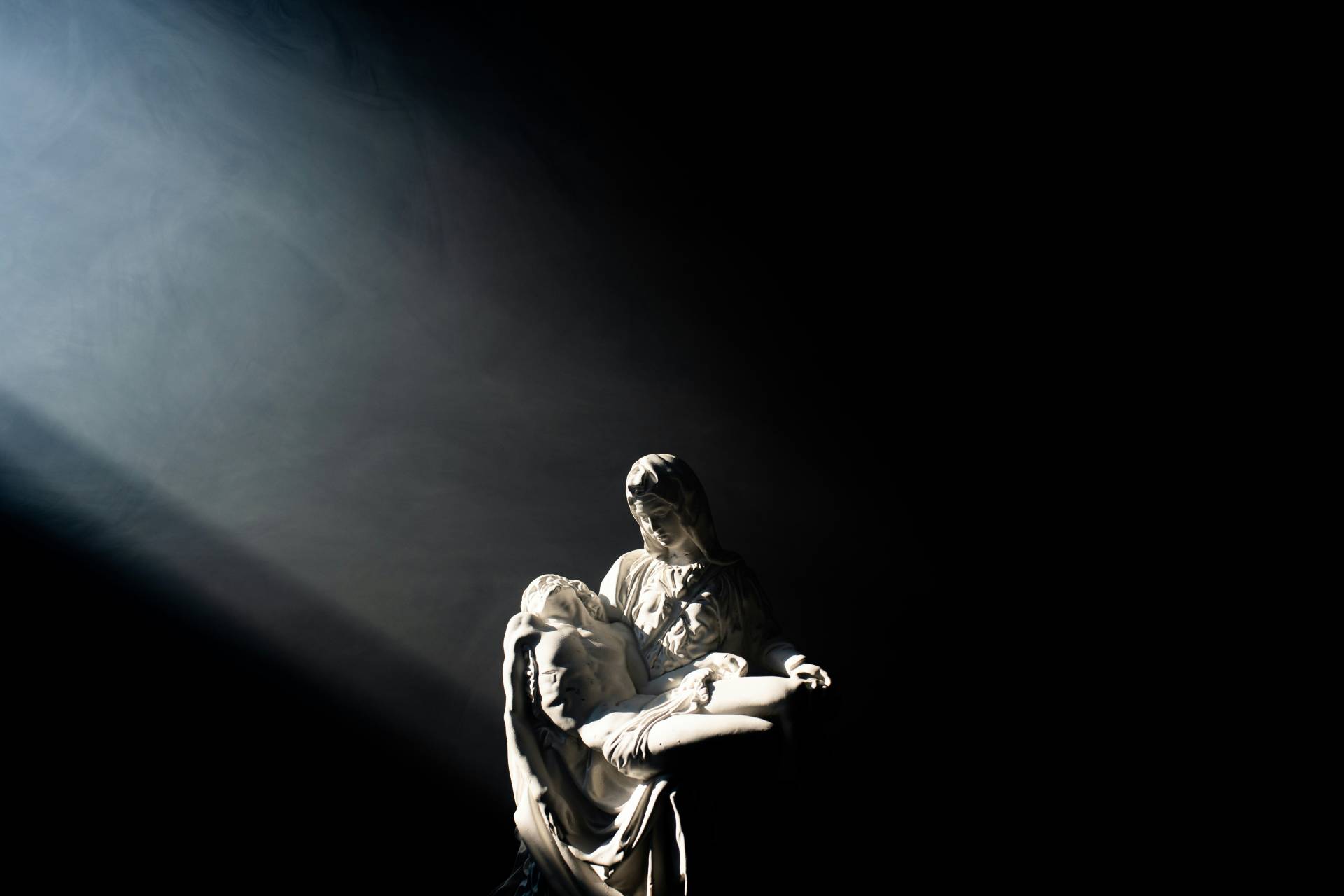
Mary's body was the tabernacle of the Incarnation. Not in the metaphorical sense in which we speak of our bodies as temples of the Holy Spirit — though that is real and sacred. In the literal, physical, biological sense. The eternal Son of God took his human nature from her flesh. His humanity — the humanity in which he walked, taught, suffered, died, and rose — was constituted from her body. Her blood nourished him. Her flesh became his flesh. The Word who was with God and who was God (John 1:1) became incarnate from her, of her, through her.
We established in the previous post that for the Incarnation to be coherent, the vessel had to be kecharitōmenē — constitutively holy, sinless from the beginning, adequate to the presence she was asked to contain. The holiness of the vessel must match the holiness of the presence. The container must be commensurate with the contained.
Now ask the question that follows directly from that principle: what happens to that vessel after it has served its purpose?
The body that carried God — that provided the flesh from which God took his own human nature — could that body be left in the earth to decay? Could the living tabernacle of the Incarnation, the vessel that was found worthy to contain what no other vessel in human history had been asked to contain, be abandoned to the corruption that sin produces?
The answer follows from everything that has come before. That body was never marked by sin. It never deserved corruption. Corruption has no claim on it — not because God chose to make an exception, but because the cause of corruption was never present in it. And beyond the absence of sin's claim, there is the positive reality of what that body was — the most sacred vessel in human history, the one that bore God himself in the flesh.
To leave it in the earth would be a kind of incoherence — not a moral failure, but a theological impossibility. The logic of kecharitōmenē does not stop at the soul. It runs all the way through the body. A nature constituted by God's own grace from the beginning, never touched by sin, never subject to death's cause — that nature, body and soul together, belongs entirely to God. And God does not abandon what belongs entirely to him.
The Assumption Is Kecharitōmenē Applied to the Body
This is the insight that ties the entire five-part series together into one seamless theological arc.
Kecharitōmenē names a state — the state of a soul in complete, permanent, uninterrupted reconciliation with God, filled with nothing but his own life, separated from him by nothing at all. We said that this is the state of Heaven. The state Mary inhabited on Earth. The state we are moving toward through Christ — touching it partially in the Eucharist, reaching it fully only in the resurrection.
The Assumption is simply kecharitōmenē applied to the body.
For us, the body must wait. We are not yet fully kecharitōmenē — we carry the foretaste but not the fullness, the trajectory but not the destination. Our bodies still bear the wound of the Fall, still succumb to the corruption that sin introduced into human flesh, still await the resurrection in which death will finally be swallowed up in victory. The soul of the redeemed reaches Heaven. The body waits in the earth until the last day.
But Mary is fully kecharitōmenē. Was always fully kecharitōmenē. Her body bore no wound of the Fall, carried no seed of corruption, was subject to no claim that sin could make. And so when her earthly life ended, there was nothing to separate — no wound in the flesh to be worked out through decay, no corruption to complete its process, no sentence of death to be executed on a body that had never incurred it.
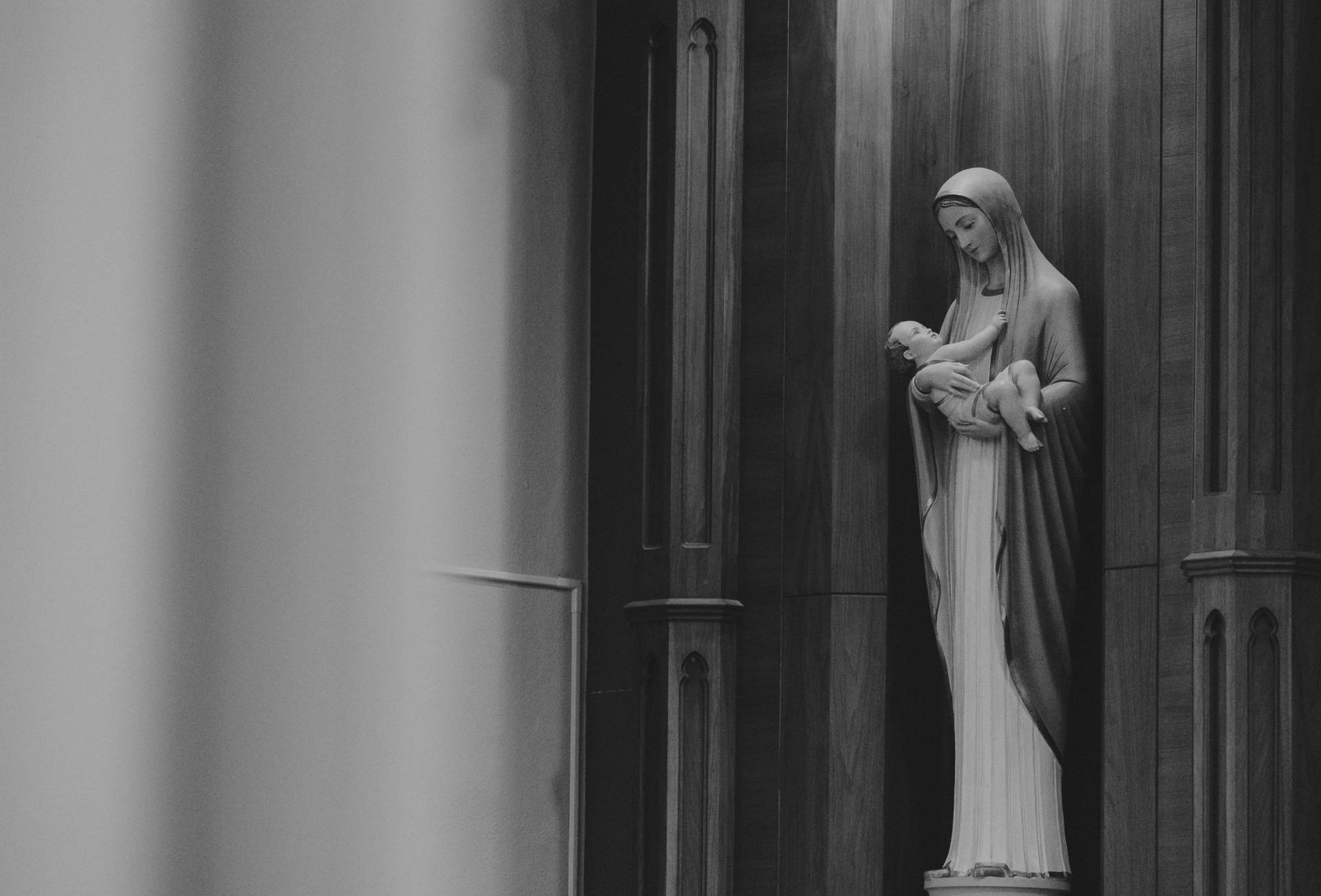
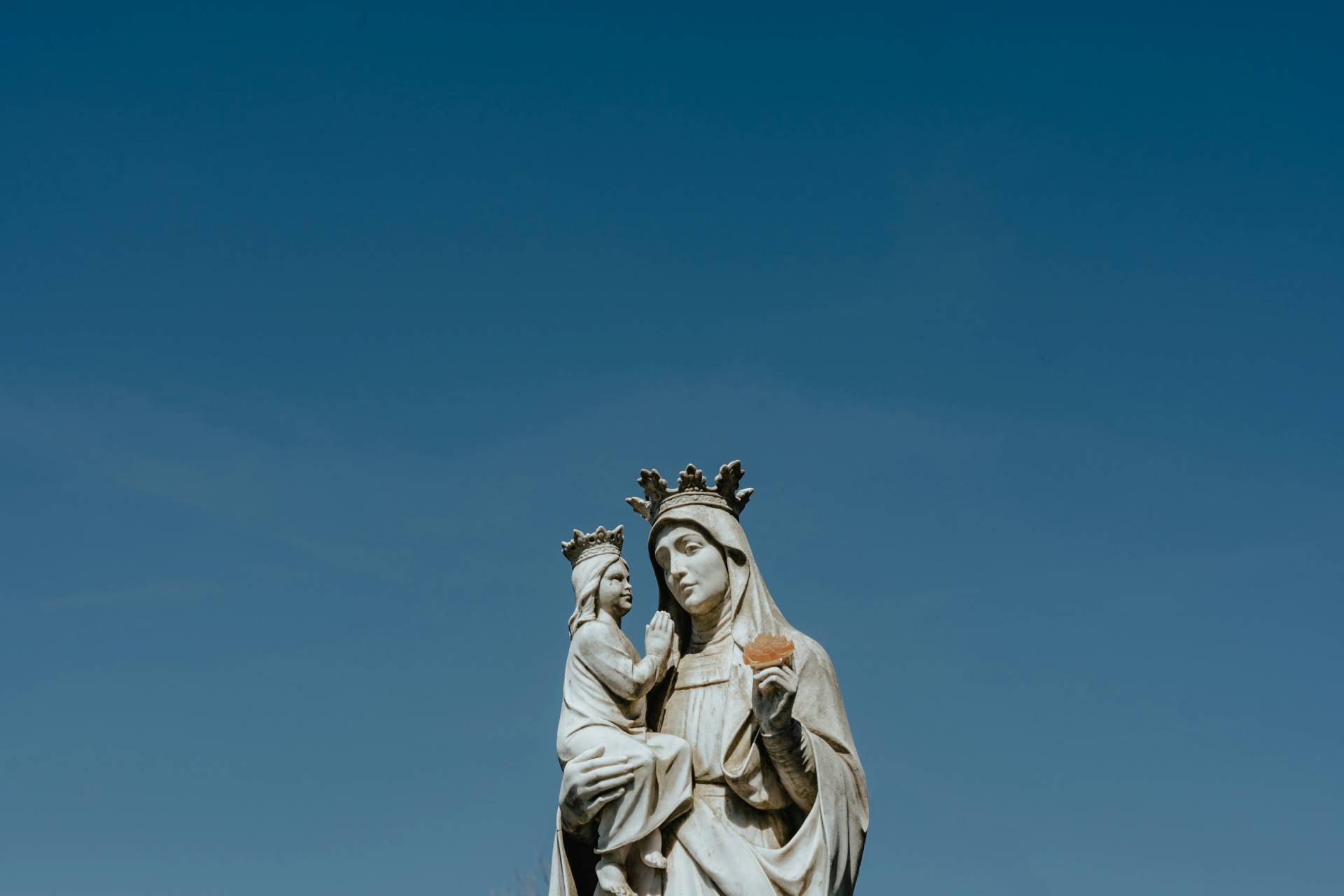
Body and soul together, she belongs entirely to God. Body and soul together, she enters the fullness of the state she always inhabited. Body and soul together, she is assumed — taken, received, completed — into the Heaven that she already, in her very nature, embodied on Earth.
The Assumption is not a miracle performed from outside. It is the natural conclusion of what kecharitōmenē means, applied without exception to every dimension of Mary's being — soul and body, spirit and flesh, the inner reality and its outward, material expression.
May the Lord bless you and keep you.
About the author
I'm a Catholic layman from Fort Lauderdale, Florida. No seminary, no credentials — just a deep love for the Faith and a conviction that ordinary Catholics are called to evangelize.
Related articles
Apologetics
The Perpetual Virginity of Mary: A Complete Linguistic, Historical, and Theological Defense
The perpetual virginity of Mary — the teaching that Mary remained a virgin before, during, and after the birth of Jesus — is one of the oldest and most consistently held beliefs in Catholic and Orthodox Christianity.

Join the community
Subscribe to our weekly newsletter for curated inspiration, delivered to your inbox.
We never share your data. See Privacy Policy for more info.