





























Brian Acebo Apologetics
Sola Scriptura
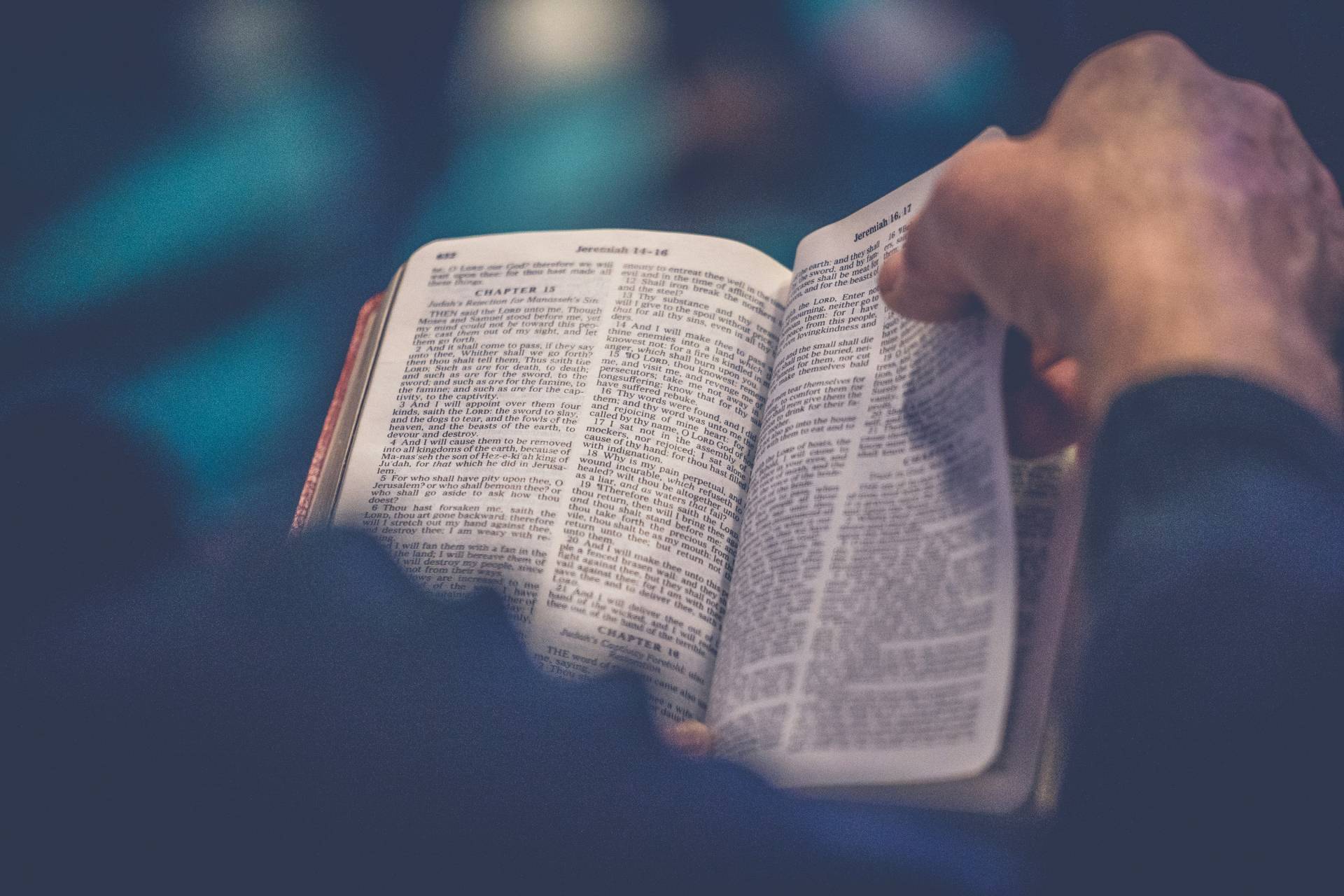
Sola Scriptura — the doctrine that Scripture alone is the sole rule of faith — is self-defeating. The Bible does not teach it, the early Church did not practice it, and the history of Protestantism shows exactly what happens when it is applied consistently.
Sola Scriptura — the doctrine that Scripture alone is the sole rule of faith — is the foundational principle of Protestant Christianity. It is also self-defeating. The Bible itself does not teach it, the early Church did not practice it, and the history of Protestantism demonstrates with painful clarity what happens when it is applied consistently: not unity, but endless fragmentation.
What Sola Scriptura Actually Claims
Sola Scriptura is the belief that the Bible is the only authority for Christian faith and practice. It is typically paired with Sola Fide — salvation through faith alone — and together they form the twin pillars of the Protestant Reformation. At its core, Sola Scriptura claims that God cannot work authoritatively outside of the written Scriptures.
Catholics agree entirely that Scripture is inspired and authoritative. St. Paul says as much:
"All Scripture is inspired by God and profitable for teaching, for reproof, for correction, and for training in righteousness, that the man of God may be complete, equipped for every good work." — 2 Timothy 3:16–17
The Catholic position is that Scripture is an authority — a supreme one — not the only authority. The distinction matters, because nowhere in that passage does Paul say Scripture alone is sufficient. He says it is profitable, and that through it the man of God may be equipped. That is not the same claim.
Scripture Supports Both Written and Oral Tradition
The New Testament itself testifies against the idea that written text was ever meant to be the sole carrier of the faith. Paul explicitly commends oral tradition alongside Scripture:
"So then, brothers and sisters, stand firm and hold fast to the traditions that you were taught by us, either by word of mouth or by our letter." — 2 Thessalonians 2:15
He thanks the Thessalonians for receiving his preaching not as a human word but as the word of God (1 Thess 2:13). The word of God, by Paul's own definition, arrives through spoken proclamation — not Scripture alone. The Bereans searched the Scriptures to verify what Paul taught, which means Paul's teaching came first, and Scripture served as its confirmation — not its replacement.
Peter adds a further caution:
"No prophecy of Scripture is a matter of one's own interpretation." — 2 Peter 1:20
"His letters contain some things that are hard to understand, which ignorant and unstable people distort, as they do the other Scriptures, to their own destruction." — 2 Peter 3:16
Scripture, Peter tells us, can be distorted — and without an authoritative interpreter, there is no mechanism to prevent it.
The Early Church Did Not Rely on Scripture Alone
The first Christians had no New Testament. The Catholic canon was not formally affirmed until the Council of Rome in AD 382. For the first three and a half centuries of Christianity, the faith was transmitted orally — from Christ to the Apostles, from the Apostles to their successors, and from those successors to their communities. The word of God traveled by preaching, by example, and by the living memory of the Church long before it was compiled into a single book.
Jesus Himself never wrote anything down. He appointed Apostles, gave them authority, and sent them to teach. When disputes arose in the early Church, He prescribed a clear process:
"If he refuses to listen to them, tell it to the church; and if he refuses to listen even to the church, let him be to you as a Gentile and a tax collector." — Matthew 18:17
The final authority is the Church — not an individual's reading of a text.
The Protestant Reformers Could Not Agree With Each Other
The most powerful argument against Sola Scriptura is not theological. It is historical. If Scripture is self-interpreting and sufficient on its own, then sincere Christians reading it carefully should converge on the same conclusions. They have not.
Martin Luther and Ulrich Zwingli, two of the Reformation's leading figures, famously disagreed over the Eucharist. Luther held that Christ was truly present in the bread and wine through sacramental union. Zwingli held that the bread and wine were purely symbolic. Both men were reading the same Bible. Their dispute was never resolved.
Zwingli's followers went further, concluding that infant baptism was invalid. Zwingli disagreed. The dispute ended not in theological resolution but in state-enforced drowning — Felix Manz, an Anabaptist, was executed by the Zurich city council for practicing re-baptism. The Bible offered no unambiguous answer that could settle the question, because without an authoritative interpreter, every reader becomes his own pope.
Since the Protestant Reformation in the early sixteenth century, Sola Scriptura has produced thousands of Christian denominations, each claiming biblical warrant for contradictory positions. This is not a coincidence. It is the predictable result of removing the interpreter while keeping the text.
The Authority of the Church
St. Ignatius of Antioch, a direct disciple of the Apostle John and martyred only years after John's death, wrote that every church on earth should defer to the Roman church by reason of its authority, and that the path to truth runs through the bishops — the Apostles' chosen successors. This is not a medieval innovation. It is first-century Christianity.
Jesus prayed explicitly for the unity of His Church:
"That they may all be one, just as you, Father, are in me, and I in you, that they also may be in us, so that the world may believe that you have sent me." — John 17:21
That unity is impossible if every believer is his own interpreter. Christianity was never designed to function that way. It was designed to be transmitted — from Christ to Apostles, from Apostles to successors, and from successors to the faithful — through a living Church that the gates of hell would not prevail against. Sola Scriptura, whatever its intentions, dismantles that transmission and replaces it with opinion. The fruit of that substitution is visible in every divided congregation that claims the Bible as its only guide.
May the Lord bless you and keep you.

About the author
I'm a Catholic layman from Fort Lauderdale, Florida. No seminary, no credentials — just a deep love for the Faith and a conviction that ordinary Catholics are called to evangelize.
Related articles
Apologetics
The Perpetual Virginity of Mary: A Complete Linguistic, Historical, and Theological Defense
The perpetual virginity of Mary — the teaching that Mary remained a virgin before, during, and after the birth of Jesus — is one of the oldest and most consistently held beliefs in Catholic and Orthodox Christianity.

Join the community
Subscribe to our weekly newsletter for curated inspiration, delivered to your inbox.
We never share your data. See Privacy Policy for more info.