


























Brian Acebo Prayer & Spiritual Life
Hail Mary
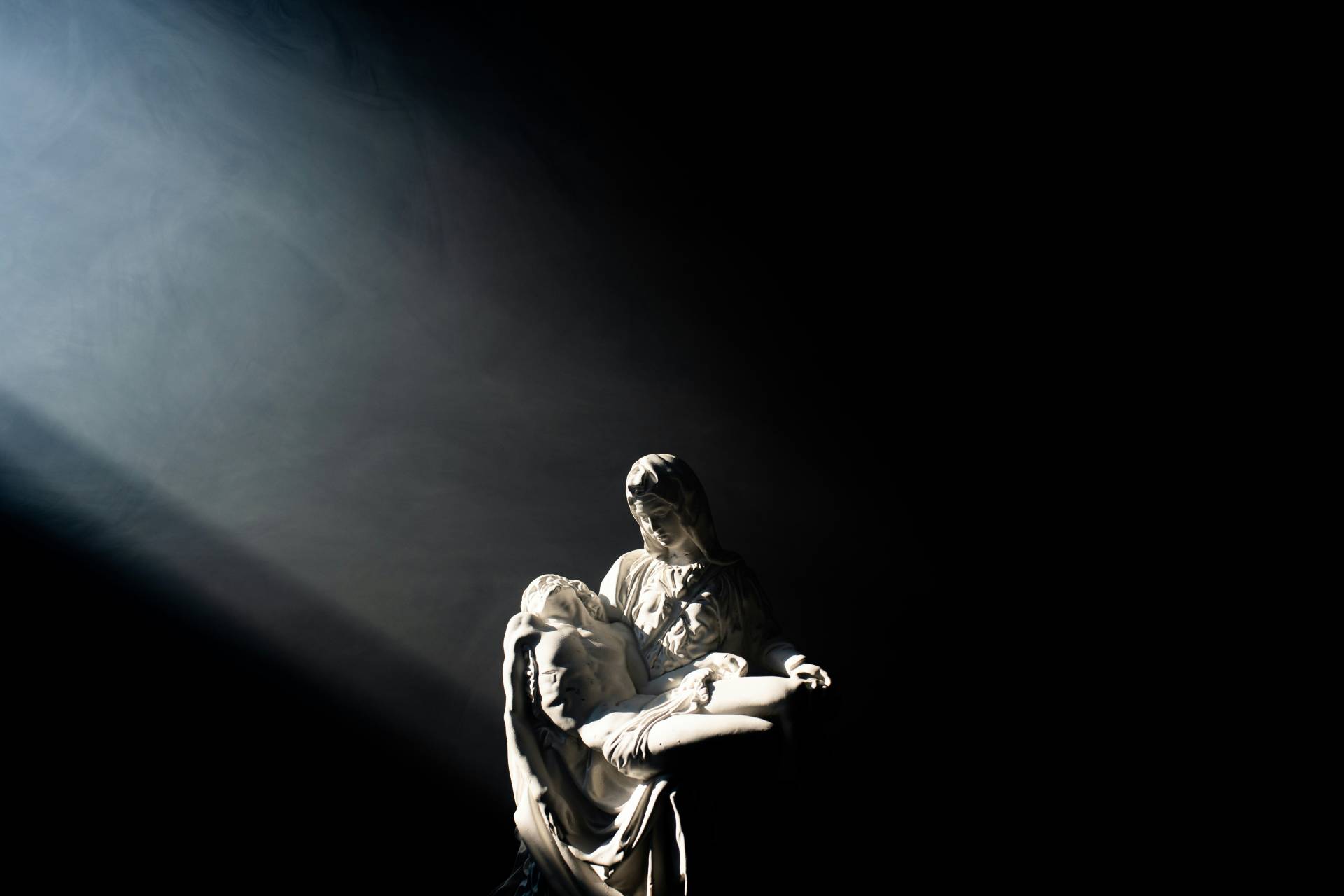
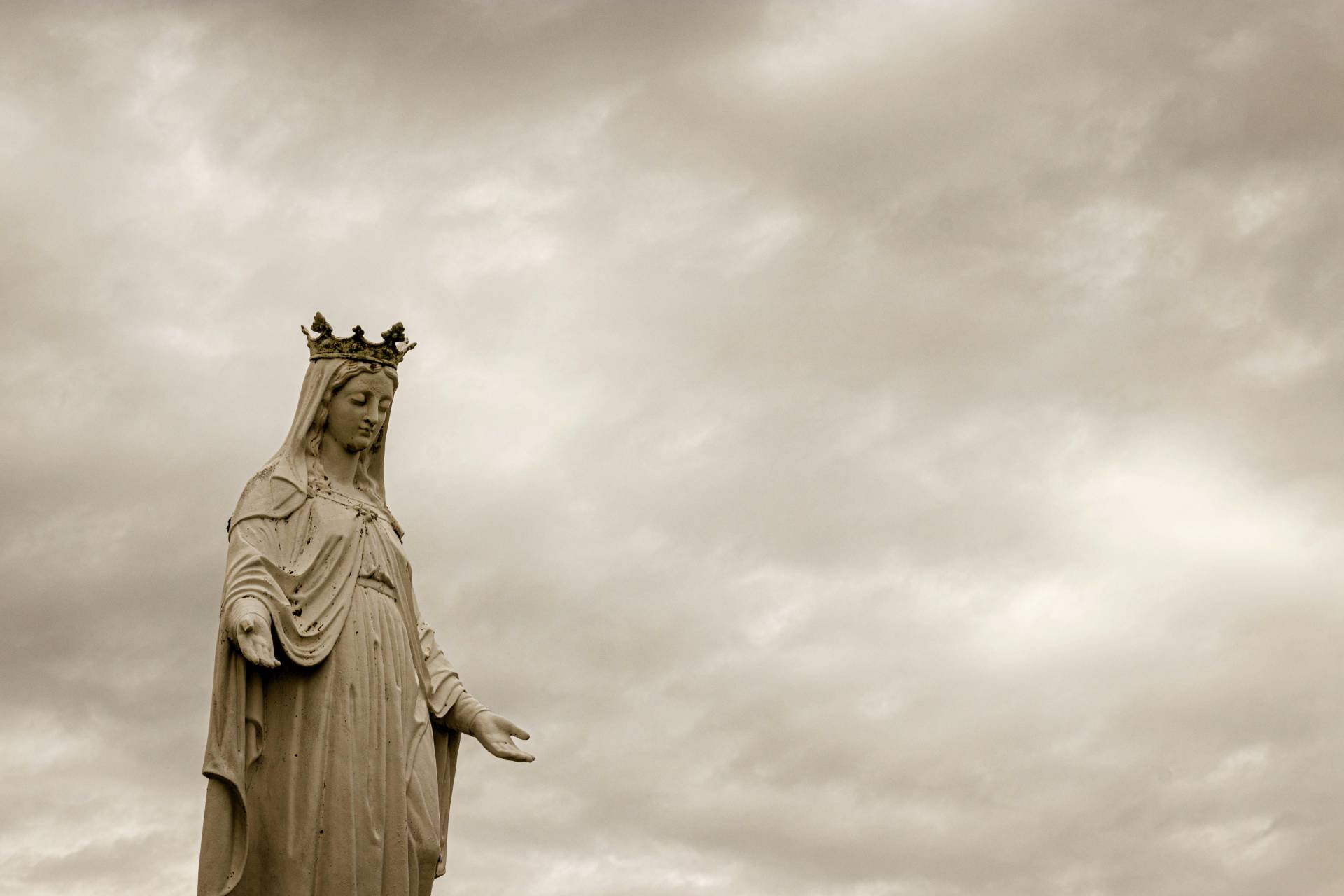
The Hail Mary is a miniature gospel. Every line is either a quotation from Scripture or a declaration that flows from it. Its ultimate subject is not Mary but the one she bore.
Hail, Mary, full of grace,
the Lord is with thee.
Blessed art thou among women
and blessed is the fruit of thy womb, Jesus.
Holy Mary, Mother of God,
pray for us sinners,
now and at the hour of our death.
Amen.
A Prayer of Royal Honor, Grace, and Intercession
The Hail Mary is one of the most prayed prayers in the history of Christianity — and one of the most misunderstood. It is often treated as a devotion to Mary for Mary's sake, a Catholic habit that non-Catholics find puzzling and that even some Catholics practice without fully grasping what they are saying. In reality, it is a miniature gospel. Every line of it is either a quotation from Scripture or a theological declaration that flows directly from Scripture, and its ultimate subject is not Mary but the one she bore.
Hail, Full of Grace
The prayer opens with the angel Gabriel's greeting from Luke 1:28. The word hail — chaire in Greek — was not a casual salutation. In the Greco-Roman world, it was the greeting reserved for royalty, for persons of the highest dignity. Gabriel does not begin with Mary's name. He begins with a royal salutation and then with her title: kecharitōmenē — the graced one, the one whose very being is constituted by God's grace.
St. Jerome rendered kecharitōmenē as gratia plena in his Latin translation — full of grace — and this is the phrase that entered the prayer. It is not decorative language. It is a precise theological term describing a permanent state of being: not a woman who has received grace as one of several qualities, but a woman whose existence is grace, saturated with God's own life from the first moment she existed. Every time the prayer is said, this title is being proclaimed.
The Lord Is With Thee
Gabriel's next words are not encouragement or reassurance. They are an ontological declaration — a statement about what is actually present in Mary at the level of being itself. The Lord is with her not as He is generally present to all creation, but as He dwelt in the Ark of the Covenant, as He filled the Holy of Holies: actually, fully, without mediation. She is, before the Incarnation has even begun, the living place where God's presence dwells completely.
Blessed Art Thou Among Women
These words come from Elizabeth, Mary's cousin, who cries them out when Mary visits her — filled with the Holy Spirit, recognizing immediately what she is in the presence of (Luke 1:42). Elizabeth is not offering a polite compliment. She is making a theological declaration: Mary is blessed among women in a way that is categorically unique. No other woman has been, or will be, the Mother of God.
Holy Mary, Mother of God
The second half of the prayer shifts from proclamation to petition. The title Mother of God — Theotokos in Greek — was formally defined at the Council of Ephesus in AD 431, not to honor Mary beyond her due but to protect the truth of the Incarnation. If Jesus is truly God and truly man, and if Mary is truly His mother, then she is truly the Mother of God. To deny the title to Mary is to deny something about Jesus — namely, that the one born of her is the second person of the Trinity.
Asking Mary to pray for us reflects the Church's belief in the Communion of Saints: that those who have died in Christ are more alive than we are, and that their prayers carry weight before God. Mary's intercession is not in competition with Christ's mediation. It operates within it — as all Christian intercession does. We ask others to pray for us; we ask Mary to pray for us. The difference is in who she is and how close she stands to the Son she bore.
Now and at the Hour of Our Death
The final petition names the two moments that matter most: now — this present moment with all its ordinary need — and the hour of death, which is the moment of ultimate need. To ask Mary to accompany us in both is to ask her to be present throughout the whole of life and at its conclusion. She accompanied her Son from Bethlehem to Calvary. We ask her to accompany us from wherever we are to the same destination he arrived at: the Father's presence, on the other side of death.
May the Lord bless you and keep you.

About the author
I'm a Catholic layman from Fort Lauderdale, Florida. No seminary, no credentials — just a deep love for the Faith and a conviction that ordinary Catholics are called to evangelize.
Related articles
Apologetics
The Perpetual Virginity of Mary: A Complete Linguistic, Historical, and Theological Defense
The perpetual virginity of Mary — the teaching that Mary remained a virgin before, during, and after the birth of Jesus — is one of the oldest and most consistently held beliefs in Catholic and Orthodox Christianity.

Join the community
Subscribe to our weekly newsletter for curated inspiration, delivered to your inbox.
We never share your data. See Privacy Policy for more info.