

























The Eucharist: Jesus' Most Important Teaching
The Eucharist is not a representation of Christ but His actual presence — the summit of the Christian life, rooted in Scripture and held by the Church from the very beginning.
The Eucharist is not a representation of Christ. It is His actual presence — the path to union with God that He established Himself, fulfilling every Old Testament prefiguration and standing as the summit of the Christian life. Through it, believers don't merely recall a historical event. They participate in it, becoming living temples of the Holy Spirit and sharers in God's eternal covenant.
The Real Presence
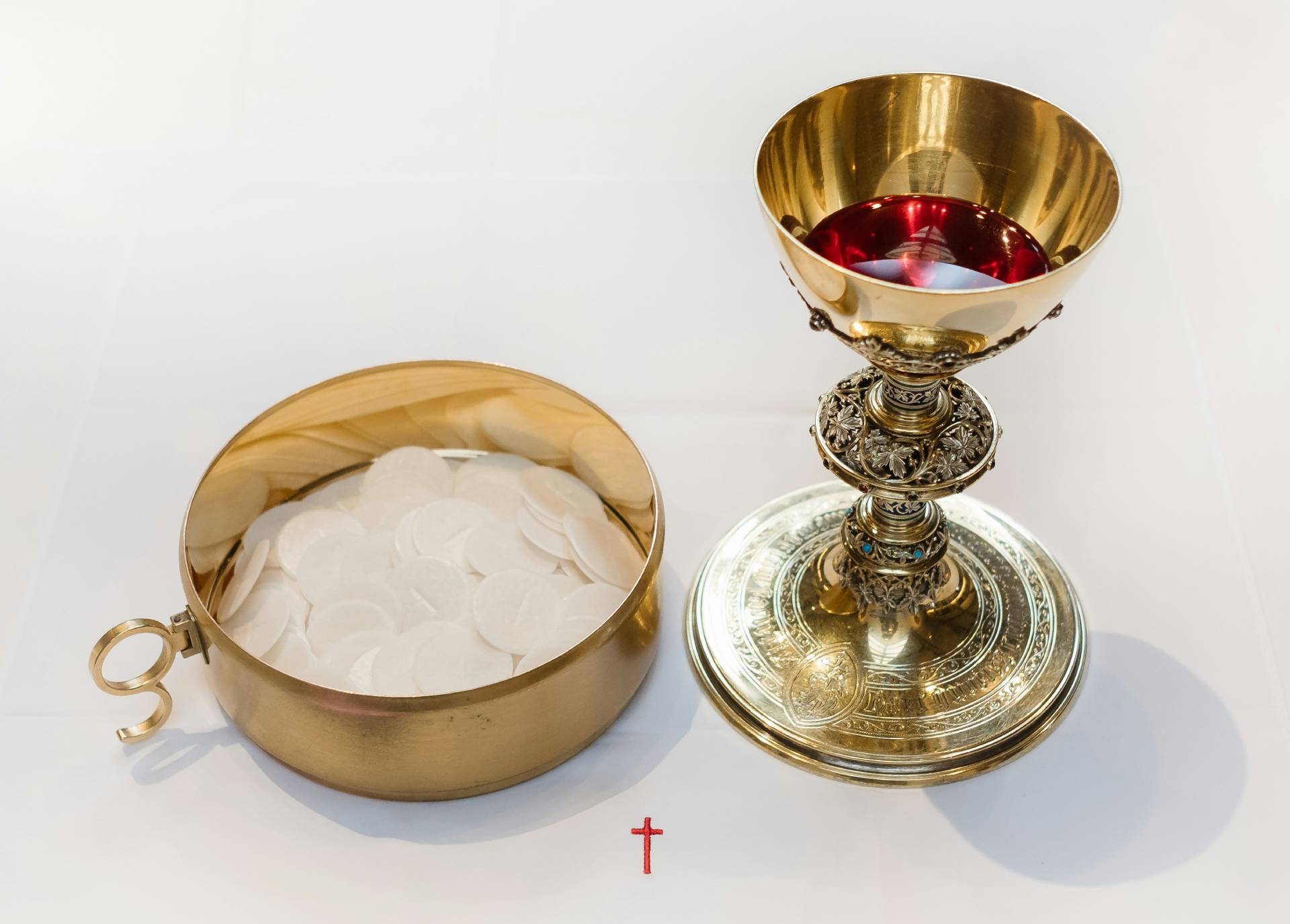
The central claim of the Catholic Church regarding the Eucharist is the Real Presence of Christ. When a validly ordained priest consecrates the bread and wine, they do not become symbols or spiritual stand-ins. Through transubstantiation, they become the body, blood, soul, and divinity of Jesus Christ. The substance changes entirely, while the appearances of bread and wine remain.
This is not a claim the Church invented. It is a claim Jesus made Himself.
The popular objection — that Catholics and Orthodox commit idolatry by worshipping bread and wine — rests on a misunderstanding of what the Church actually teaches. Catholics do not worship bread and wine. They worship Christ, who is truly present under those appearances. The distinction matters enormously.
"The power of the words and the action of Christ, and the power of the Holy Spirit, make sacramentally present under the species of bread and wine Christ's body and blood, his sacrifice offered on the cross once for all." — CCC 1353
"By this sacrament, we unite ourselves to Christ, who makes us sharers in his body and blood to form a single body." — CCC 1331
It is also worth clarifying a common misconception about Catholic teaching: the Eucharist is not held to be an absolute necessity for salvation in the same way baptism is. Baptism — or at minimum, a sincere desire for it coupled with contrition and love of God — is the essential ingredient. The Eucharist is a normal necessity, the primary means by which we receive grace and unite with Christ at the deepest level. It memorializes His sacrifice, reaffirms our bond with Him, and nourishes the soul for the journey.
The Biblical Foundation
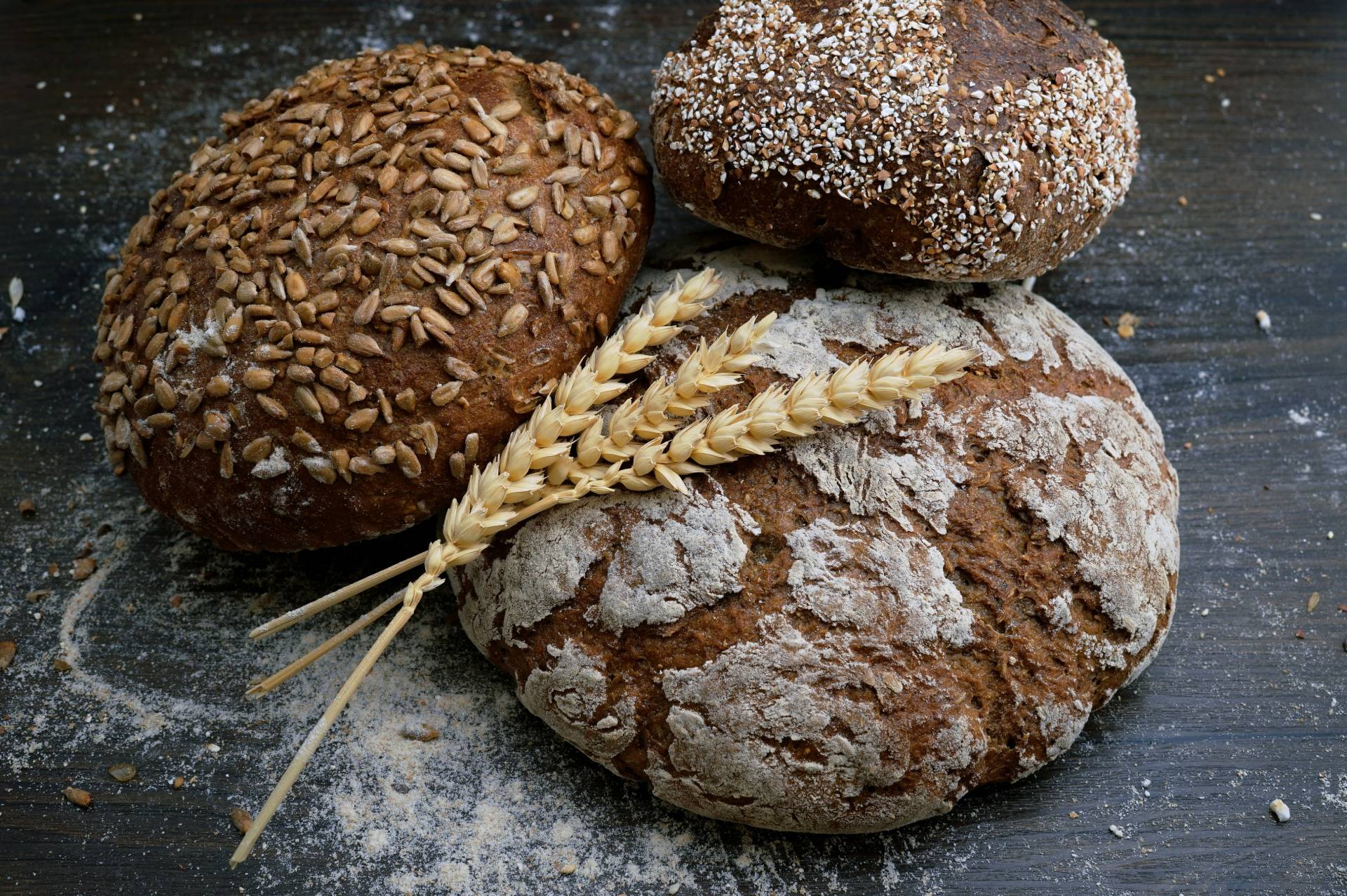
The clearest scriptural case for the Eucharist is John 6. The day after Jesus multiplied the loaves and fed five thousand people, the crowd followed Him looking for more. Jesus redirected them:
"Do not work for food that spoils, but for food that endures to eternal life, which the Son of Man will give you." — John 6:27
When they asked what God required, He answered: belief in the one He had sent. But the crowd pushed back, demanding a sign greater than manna in the wilderness. Jesus responded not by pointing beyond Himself but by claiming to be the sign itself:
"I am the bread of life. Whoever comes to me will never be hungry, and whoever believes in me will never be thirsty." — John 6:35
The Jews grumbled, assuming metaphor. Jesus did not soften His words. He intensified them:
"I am the living bread that came down from heaven. Whoever eats of this bread will live forever; and the bread that I will give for the life of the world is my flesh." — John 6:51
The crowd was scandalized. "How can this man give us his flesh to eat?" Jesus did not step back to clarify that He had been speaking figuratively. He doubled down:
"Very truly, I tell you, unless you eat the flesh of the Son of Man and drink his blood, you have no life in you. Those who eat my flesh and drink my blood have eternal life, and I will raise them up on the last day; for my flesh is true food and my blood is true drink." — John 6:53–55
Even His disciples were shaken. Many walked away. Jesus let them go without calling after them to explain it was only a symbol. He turned to the Twelve and asked if they too would leave. That silence is the argument. A teacher corrects misunderstandings. Jesus said nothing — because there was no misunderstanding to correct.
The figurative interpretation also collapses under its own linguistic weight. Fr. John A. O'Brien explains:
"The phrase 'to eat the flesh and drink the blood,' when used figuratively among the Jews, as among the Arabs of today, meant to inflict upon a person some serious injury, especially by calumny or by false accusation. To interpret the phrase figuratively then would be to make our Lord promise life everlasting to the culprit for slandering and hating him, which would reduce the whole passage to utter nonsense."
There is also a precise linguistic detail worth noting. In John 6:54, the Greek word for "eats" shifts to trogon — meaning to gnaw or chew. This is not the language of metaphor. It is the language of physical consumption, used deliberately to foreclose any symbolic reading. Jesus claimed to be the bread from heaven twelve times in this discourse and four times commanded them to eat His flesh and drink His blood. The repetition was not accidental. He was establishing a doctrine, not composing a poem.
The Last Supper and the New Covenant
What Jesus announced in John 6, He instituted at the Last Supper. Taking bread, He said: "This is my body, which is given for you. Do this in remembrance of me." Taking the cup: "This cup that is poured out for you is the new covenant in my blood." These were not the words of a man offering a memorial symbol. They were the words of a priest offering a sacrifice — the definitive sacrifice, the one to which every Passover lamb had pointed.
The Eucharist does not merely commemorate the cross. It makes it present. The same offering, once for all on Calvary, is sacramentally renewed at every Mass. St. Paul understood this with complete clarity. Writing to the Corinthians, he warned that whoever receives the Eucharist unworthily "eats and drinks judgment against himself, not discerning the body of the Lord" (1 Cor 11:29). That warning makes no sense if the Eucharist is merely symbolic bread. You cannot eat judgment upon yourself by failing to discern a symbol.
The Witness of the Early Church
The Real Presence was not a medieval invention. St. Ignatius of Antioch, a direct disciple of the Apostle John, wrote around AD 110 that those who deny the Eucharist is the flesh of Jesus Christ are heretics. This is within living memory of the Apostles themselves. The belief did not evolve into existence centuries later. It was there from the beginning, because it came from the One who said it first.
May the Lord bless you and keep you.

About the author
I'm a Catholic layman from Fort Lauderdale, Florida. No seminary, no credentials — just a deep love for the Faith and a conviction that ordinary Catholics are called to evangelize.
Related articles
Apologetics
The Perpetual Virginity of Mary: A Complete Linguistic, Historical, and Theological Defense
The perpetual virginity of Mary — the teaching that Mary remained a virgin before, during, and after the birth of Jesus — is one of the oldest and most consistently held beliefs in Catholic and Orthodox Christianity.

Join the community
Subscribe to our weekly newsletter for curated inspiration, delivered to your inbox.
We never share your data. See Privacy Policy for more info.