








































1 min read
Idolatry
Idolatry is the worship of any creature — ancient gods, money, power, or pleasure — in place of the one true God, violating the first commandment.
Idolatry is the divinization of a creature in place of God — the substitution of something or someone for God, worshiping a creature instead of the Creator. It violates the first commandment: "You shall have no other gods before me" (Exodus 20:3; CCC 2112).
Ancient and Modern Forms
Ancient idolatry was the worship of statues, natural forces, or pagan deities. Modern idolatry is more subtle but no less real: the worship of money (making wealth the supreme goal), power (making dominance the ultimate value), pleasure (subordinating everything to personal satisfaction), or even human beings — celebrities, political leaders, or ideologies treated with religious devotion (CCC 2113).
Why Idolatry Is Gravely Wrong
Idolatry is gravely wrong not only because it violates God's command but because it inverts the order of reality. To treat a creature as God is to lie about reality — to say that something finite and contingent is absolute. It also inevitably degrades the idolater: we become like what we worship. The human heart, made for the infinite, is diminished by worshiping the finite (CCC 2114).
Frequently Asked Questions
Is venerating statues and images idolatry? No. The Catholic Church clearly distinguishes veneration of sacred images from idolatry. Catholics do not worship statues — they honor the persons represented by them. The honor given to the image passes to its archetype. A photo of your mother is not your mother, but you still treat it with respect (CCC 2132).
May the Lord bless you and keep you.
Browse
All glossary terms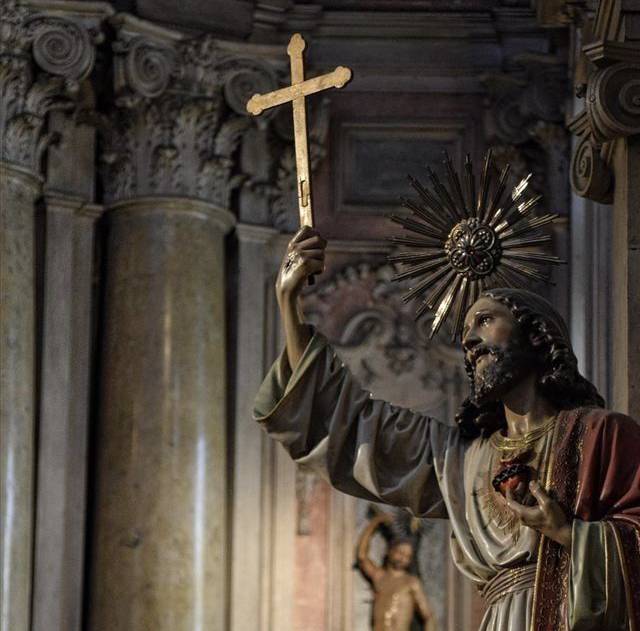
Join the community
Subscribe to our weekly newsletter for curated inspiration, delivered to your inbox.
We never share your data. See Privacy Policy for more info.