






















1 min read
The Eucharist
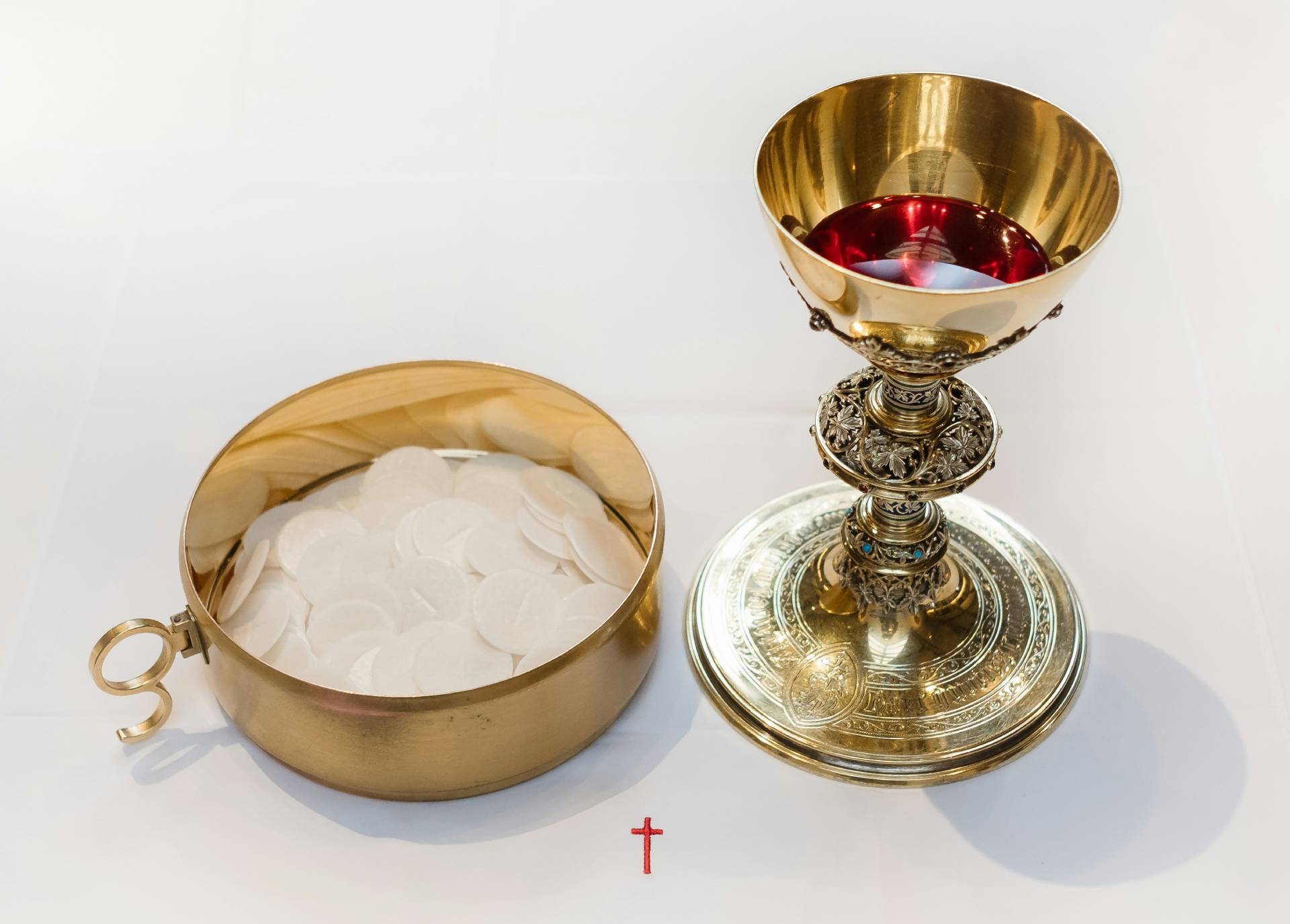
The Eucharist is the sacrament of Christ's true presence — Body, Blood, Soul, and Divinity — under the appearances of bread and wine. It is the source and summit of Christian life.
The Eucharist is the source and summit of the Christian life — the sacrament in which Jesus Christ is truly and substantially present: Body, Blood, Soul, and Divinity, under the appearances of bread and wine (CCC 1324, 1374).
The Real Presence
At the words of Consecration at Mass, the bread and wine truly become the Body and Blood of Christ — not symbolically but really, truly, and substantially. The appearances of bread and wine remain, but the substance is entirely changed. The Church calls this Transubstantiation (CCC 1374–1377).
Instituted at the Last Supper
Jesus instituted the Eucharist the night before his Passion: "This is my body which is given for you. Do this in remembrance of me" (Luke 22:19). He commanded the Church to continue this action until his return (CCC 1337–1340).
Sacrifice and Banquet
The Eucharist is simultaneously a sacrifice — the one sacrifice of Calvary made sacramentally present at every Mass without being repeated — and a sacred banquet — the meal in which the faithful receive Christ himself (CCC 1356–1381).
Frequently Asked Questions
Who can receive Holy Communion at a Catholic Mass? Catholics who are baptized, believe in the Real Presence, are in a state of grace, and have observed the one-hour fast. Those conscious of mortal sin must go to Confession first (CCC 1415).
What happens to consecrated hosts not consumed? They are reserved in the tabernacle for adoration, for the sick, and for Viaticum (CCC 1379).
May the Lord bless you and keep you.
Browse
All glossary terms
Join the community
Subscribe to our weekly newsletter for curated inspiration, delivered to your inbox.
We never share your data. See Privacy Policy for more info.