









































1 min read
The New Covenant
The New Covenant is the definitive and eternal covenant established by Christ through his blood — the fulfillment of all the Old Testament covenants, sealed at the Last Supper and on the cross.
The New Covenant is the definitive and eternal covenant established by Jesus Christ through his Passion, death, and Resurrection — the fulfillment and surpassing of all the covenants of the Old Testament. It is sealed not in the blood of animals but in the blood of the Son of God himself (CCC 66, 612).
Foretold by the Prophets
The New Covenant was announced by the prophet Jeremiah: "The days are coming when I will make a new covenant with the house of Israel... I will put my law within them and write it on their hearts" (Jeremiah 31:31–33). Unlike the Old Covenant written on stone tablets, the New Covenant is written on the human heart by the Holy Spirit (CCC 715).
Instituted at the Last Supper
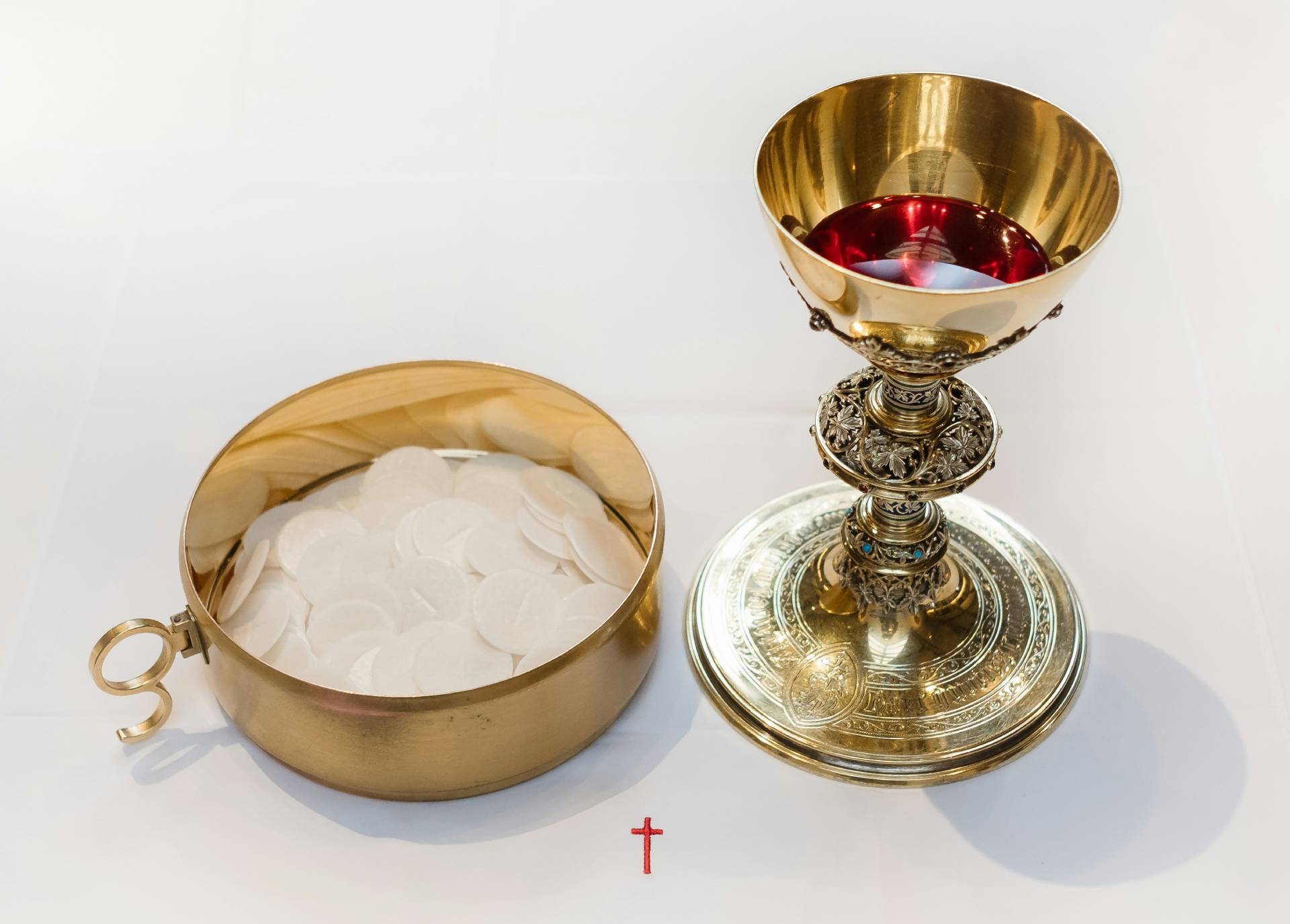
Jesus instituted the New Covenant at the Last Supper, taking the cup and saying: "This cup is the new covenant in my blood, which is poured out for you" (Luke 22:20). He sealed it definitively on the cross. The New Covenant transforms the relationship between God and humanity from a relationship of law to a relationship of grace and love (CCC 611).
The New Covenant Is Eternal
The New Covenant has no expiration date and will not be superseded. It is the definitive Word of God to humanity — "no new public revelation is to be expected before the glorious manifestation of our Lord Jesus Christ" (CCC 66).
Frequently Asked Questions
Does the New Covenant replace the Old? The New Covenant fulfills and surpasses the Old, not abolishes it. Jesus said he came not to abolish the Law but to fulfill it (Matthew 5:17). The Old Covenant was real and valid; its purposes have been definitively accomplished in Christ (CCC 121–122).
May the Lord bless you and keep you.
Browse
All glossary terms
Join the community
Subscribe to our weekly newsletter for curated inspiration, delivered to your inbox.
We never share your data. See Privacy Policy for more info.