






































1 min read
Anamnesis
Anamnesis is the liturgical act of remembering God's saving deeds — not as mere mental recollection, but as the sacramental re-presentation that makes the sacrifice of Calvary truly present at every Mass.
Anamnesis (Greek: anamnēsis, remembrance or memorial) is the liturgical act of remembering God's saving deeds in history — not as a mere mental recollection, but as a sacramental re-presentation that makes the past event truly present. It is especially central to the Eucharist, in which the sacrifice of Calvary is made present at every Mass (CCC 1103, 1362).
More Than Memory
In ordinary usage, "to remember" means to call to mind something past. In the biblical and liturgical sense, anamnesis is something far more powerful: to make present what God has done. When Israel celebrated the Passover, they did not merely recall the Exodus — they entered into it ("In each and every generation, everyone is obligated to see themselves as if they personally left Egypt"). The same is true of the Eucharistic anamnesis: Calvary becomes present (CCC 1363).
The Eucharistic Anamnesis
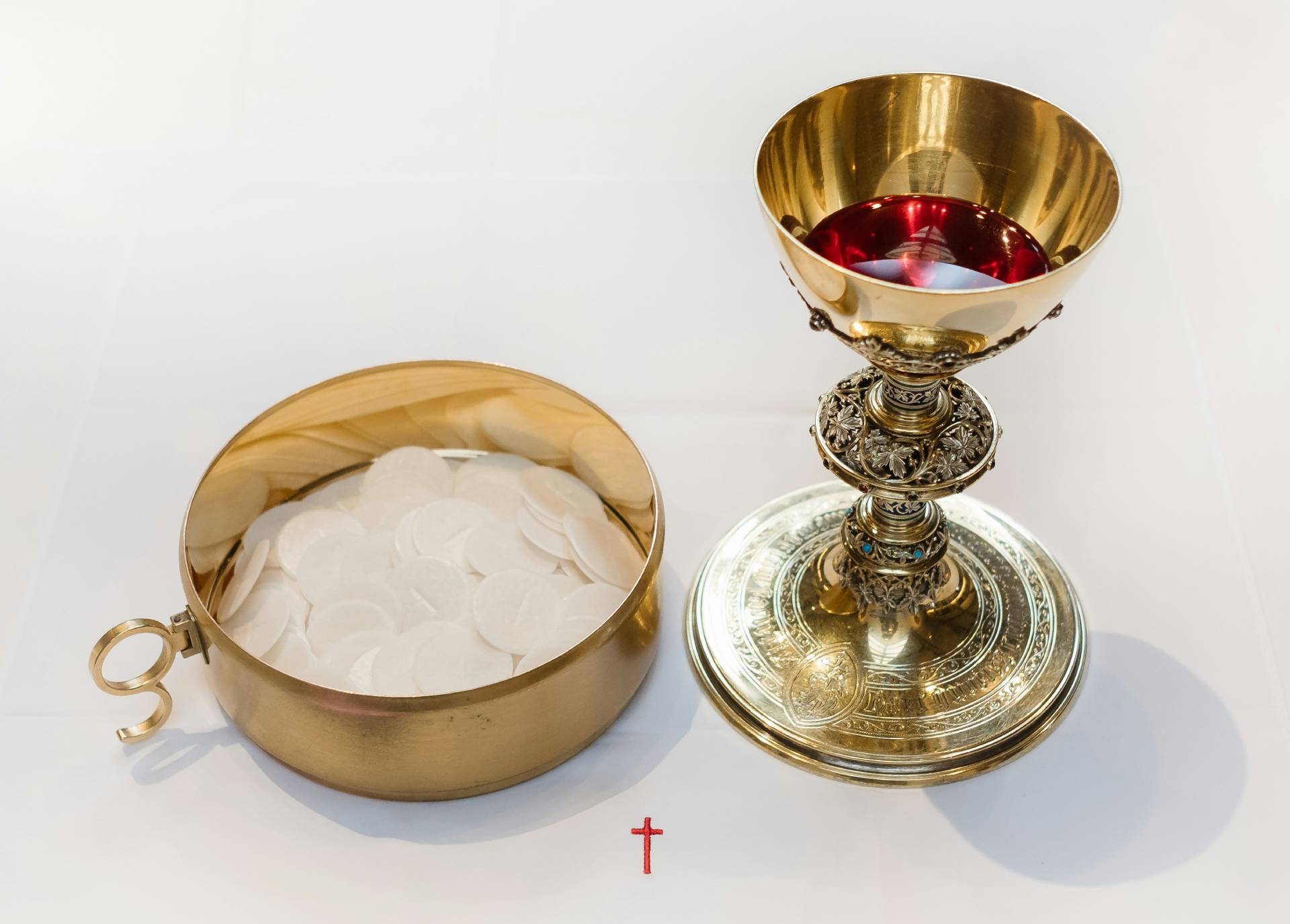
Jesus commanded at the Last Supper: "Do this in memory (anamnēsis) of me" (Luke 22:19; 1 Corinthians 11:24–25). Every Eucharistic Prayer contains an anamnesis section — a statement explicitly recalling "the Passion, Resurrection, and glorious return of Christ Jesus" and offering the one sacrifice sacramentally to the Father (CCC 1354, 1362).
Frequently Asked Questions
Is the Mass a "re-sacrifice" of Christ? No. Christ's sacrifice is offered once and for all (Hebrews 10:14). The Mass makes that one sacrifice present without repeating it — the same sacrifice offered in an unbloody manner. The anamnesis does not create a new event but makes the one eternal event present in each celebration (CCC 1367).
May the Lord bless you and keep you.
Browse
All glossary terms
Join the community
Subscribe to our weekly newsletter for curated inspiration, delivered to your inbox.
We never share your data. See Privacy Policy for more info.