
































2 min read
Lamb of God
Lamb of God is the title identifying Jesus as the perfect, once-for-all sacrifice who fulfills every sacrificial lamb in Israel's history — taking away the sin of the world through his death.
Lamb of God (Latin: Agnus Dei) is the title by which John the Baptist identified Jesus at the Jordan River: "Behold the Lamb of God, who takes away the sin of the world!" (John 1:29). It identifies Jesus as the fulfillment of every sacrificial lamb in Israel's history — the perfect, once-for-all sacrifice that the entire sacrificial system foreshadowed (CCC 523, 608).
The Old Testament Background
The image of the lamb runs through the entire Old Testament sacrificial system: the Passover lamb whose blood marked the doorposts and spared the firstborn (Exodus 12); the daily morning and evening lamb offerings in the Temple; the lamb of Isaiah 53 — "like a lamb led to the slaughter" — the suffering Servant who bears the sins of many. All of these point to Christ (CCC 608).
Jesus as the Lamb
Jesus was crucified during the Passover, at the same hour the Passover lambs were being slaughtered in the Temple. John's Gospel is deliberately structured to highlight this: Jesus dies as the true Passover Lamb, his bones not broken (John 19:36; cf. Exodus 12:46). He is "the Lamb slain from the foundation of the world" (Revelation 13:8; CCC 608).
The Lamb in the Liturgy
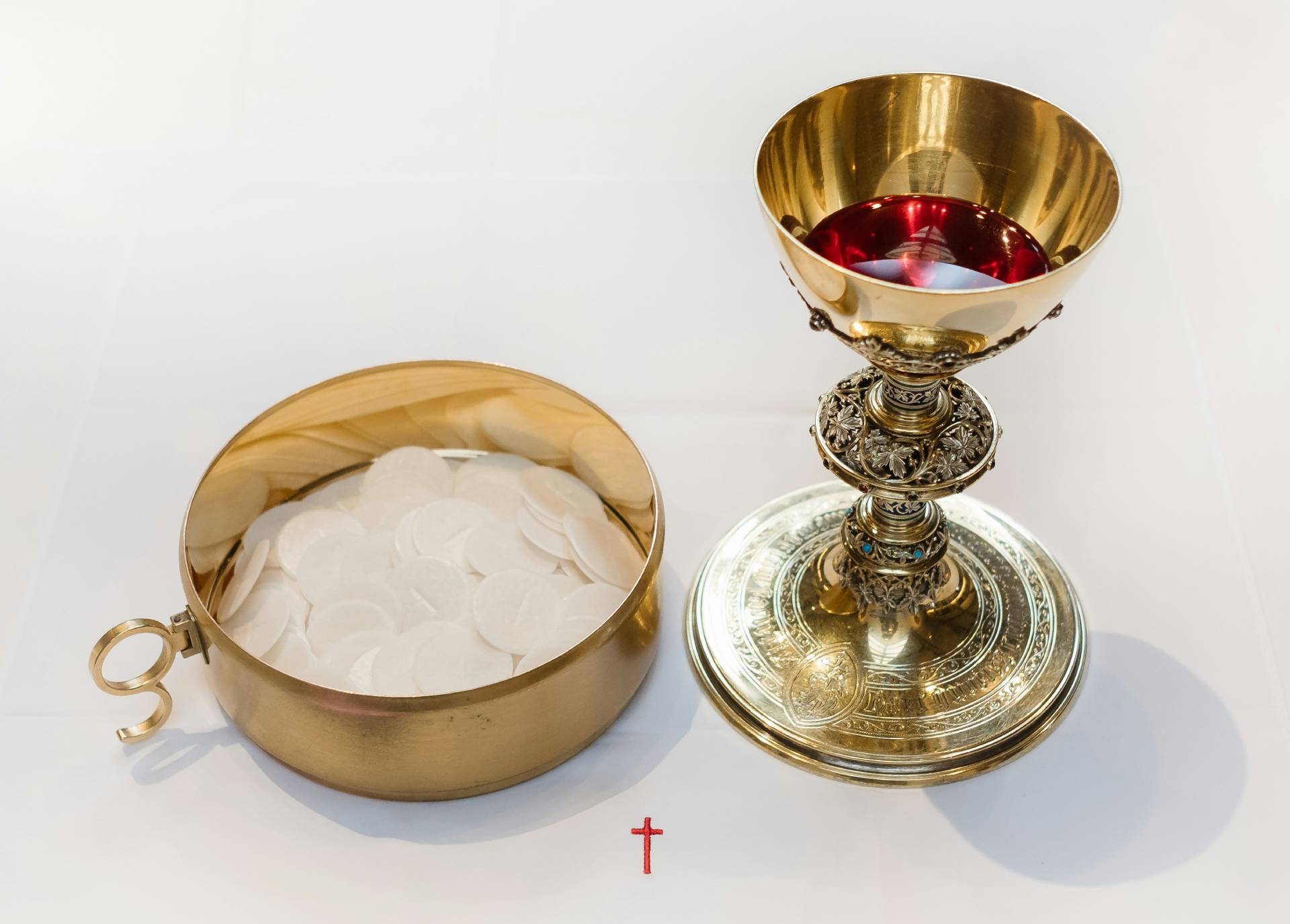
At every Mass, the priest raises the consecrated host before Communion and says: "Behold the Lamb of God, behold him who takes away the sins of the world." The congregation responds: "Lord, I am not worthy that you should enter under my roof..." — echoing the centurion's faith (Matthew 8:8; CCC 1348).
Frequently Asked Questions
How does the Lamb appear in Revelation? The Book of Revelation presents the glorified Christ as "the Lamb who was slain" (Revelation 5:6–14) — the victorious Lamb who has conquered through his sacrifice and now reigns at the center of Heaven's worship. The same weakness that seemed to be defeat is revealed as the source of all power (CCC 677).
May the Lord bless you and keep you.
Browse
All glossary terms
Join the community
Subscribe to our weekly newsletter for curated inspiration, delivered to your inbox.
We never share your data. See Privacy Policy for more info.